
Upset in the Water
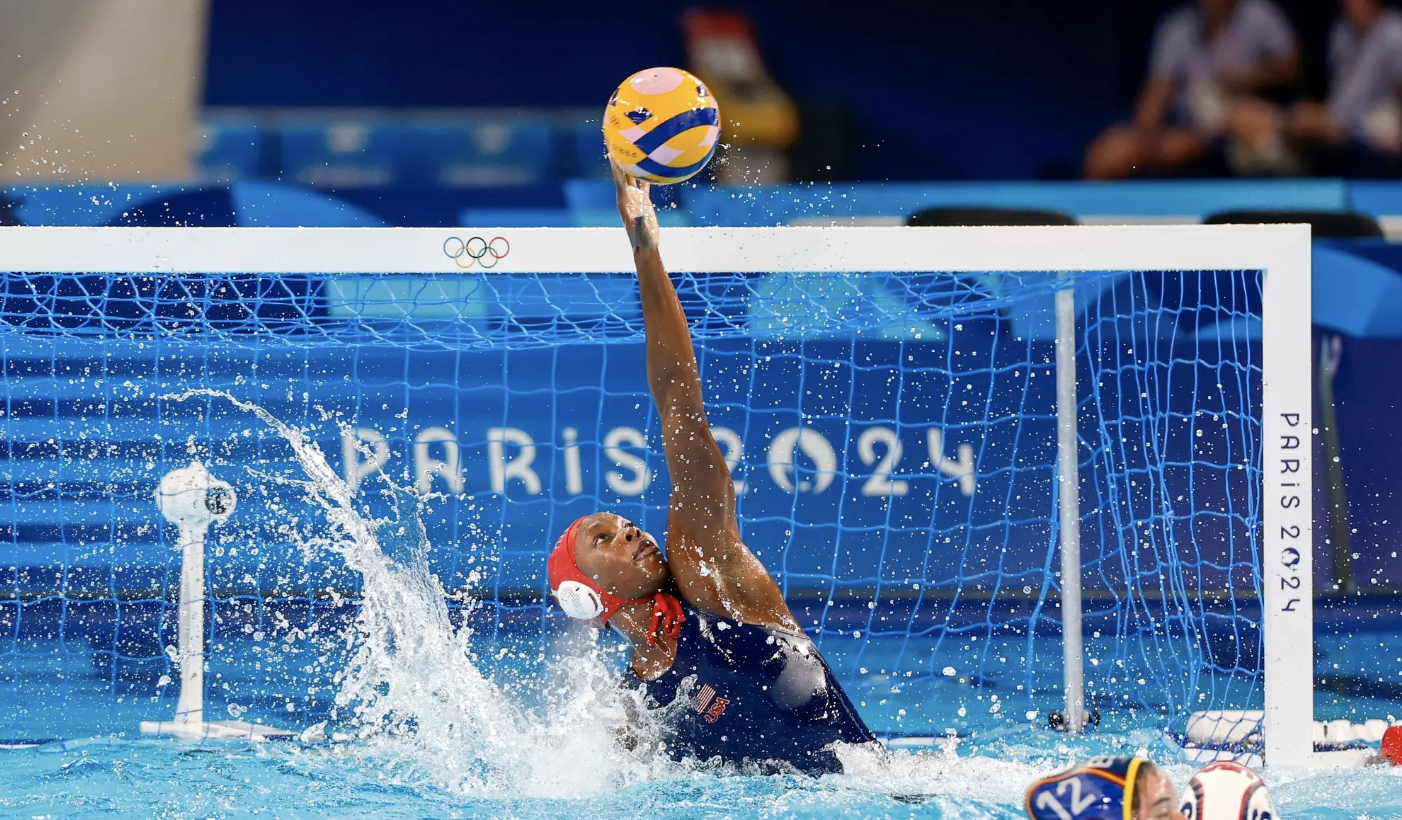
There’s no such thing as a sure thing. I didn’t just make that up; somebody else said it before me. And, it is certainly true. Just ask the US women’s water polo team. Universally acknowledged as the best women’s team in the world, they came into this competition seeking to claim a fourth consecutive gold medal, a plan that seemed purposefully on track following a 15-6 win over Greece in their opening match on Saturday. In today’s clash with Spain, things took a distinct u-turn.
A final score of 13-11 in favor of Spain was a result that saw the USA concede more goals than it has in any match over the last three Olympic Games. In fact, the last time that the USA allowed 13 goals in Olympic competition was in their opener against Hungary is 2012, a game that they actually won.
To say that this result was a shock is no exaggeration. Despite the occasional hiccup in the years since the Tokyo Games – Italy knocked the USA out in the quarter-finals of the 2023 world championships – the USA still arrived in Tokyo with justifiably high expectations. That said, many nations similarly arrived with aspirations of knocking the Americans from their perch. Spain was certainly among them, as were Hungary, Italy and the Netherlands, to name just three, all cognizant of the fact that an early upset of the favorites could de-rail that locomotive.
Spain made its statement of intent from the outset, leading by one goal, 6-5, after a bruising first half. It was in the third quarter, however, that things began to swing demonstrably towards Europe. While the NYAC trio of Maddie Musselman, Tara Prentice and Jenna Flynn all found the net – in fact, the whole team is NYAC – Spain logged four goals in less than four minutes, building a momentum that allowed them an 11-9 advantage with one quarter remaining.
Kaleigh Gilchrist scored in the fourth to bring the USA to within one goal; but, Maddie Musselman had a penalty saved by the superstar Spanish goalkeeper and the defense managed to hold the Americans scoreless for more than five-and-a-half minutes, allowing Spain to reach the finish line with a two goal lead.
It was a shocker, but it is not terminal. On its way to gold in Tokyo in 2021, the US women also lost a game in the group stage; so, the dream remains very much alive, a dream that coach Adam Krikorian has all the experience to make a reality. Next up for the USA is Italy, on Wednesday (July 31st) at 6:30pm Paris/12:30pm EST. The water will be boiling.
The majority of the other NYAC action this morning took place at the rowing venue, the elegantly named Vaires-sur-Marne Nautical Stadium, with the heats of the men’s and women’s eights on the schedule as well as the repechage of the women’s quadruple sculls. In the latter event, the NYAC’s Teal Cohen, with her three boatmates, had to place in the first two in order to advance to the A final.
It was China who forged to the early lead, holding a slim advantage over Switzerland. At half way, the US foursome was still in contention, holding third, but, as China and Switzerland battled up front, the hard charging Australian and Romanian teams proved too strong for the US which, in the closing 500m, faded to fifth. Thus, they will race in the B final, scheduled for Wednesday (July 31st), to determine places 7-9.
Next up were the heats of the men’s eight, a boat with the NYAC’s Chris Carlson in the five seat. They made no bones about their intentions in this event, powering ahead from the start and effecting a dominating victory that sees them advance directly to the A final. No repechage for these guys; it’s all straight finals, all the way.
With just one to advance, the US crew got away quickly, although the team from the Netherlands was abreast at the half way mark. In the second half, though, it was all USA all the way and, by the line, they had a comfortable advantage of almost three seconds.
Then it was the women’s turn, also the eight, and a boat containing the sensational NYAC six of Charlotte Buck, Olivia Coffey, Claire Collins, Meghan Musnicki (going for her third Olympic gold), Regina Salmons and Maddie Wanamaker. With only the winners going straight to the final and the rest to the repechage, the heat was on, just as it had been for the men. A second place finish behind the world champion Romanians, though, means that Buck et al will have to contest the extra round, that coming on Thursday (August 1st).
“We switched our lineup,” explained, Buck, “so it was the first time for us down the track in this lineup. I think that we have good, solid, takeaways, and I think that the rep is a really good opportunity for us. There is no risk to trying out something for the next level of our race plan.”
Added Salmons, “I’ve had the pleasure of getting to race with Charlotte four times now in the women’s eight, and she has such an indomitable rhythm in the stroke seat. It is such a great feeling to be able to turn my brain off and just haul on it knowing that she’s putting the lines in the coloring book where they need to be.”
From the rowing venue, it was over to the Champ de Mars Arena for judo, where 21-year-old NYAC phenom, Jack Yonezuka, was gaining his first Olympic experience. Having become the first US man to win a medal at the World Judo Juniors Championships (bronze in 2022, silver in 2023), in many circles – definitely in NYAC circles – Yonezuka is seen as the future of US judo. (That would be fitting, given that his grandfather, father and brother are all renowned judokas).
The Olympic experience is something entirely different, of course; and, as they say, experience is something you never have until right after you need it. So it proved for the NYAC man this morning, as he fell by ippon to Moldova’s Adil Osmanov in the -73kg division. In fact, the match was ended at 3:40 after Yonezuka incurred his third shido, a penalty (two for grabbing below the belt, one for non-combativity), effectively defaulting the bout.
Significantly, Yonezuka was accompanied into the arena by his father, Nick, who is also his coach and who qualified for the 1980 Olympics, but who never had the chance to compete due to the US boycott. Thus, in a moment of magnificent poignancy, father and son made their Olympic debuts together.
Still, the outcome was disappointing and, in large part, due to inexperience at this level. “I wish I could see it back just to see exactly what happened,” Yonezuka commented. “In the moment, it’s frustrating because I didn’t really feel myself touch his leg. I thought I had two hands on his arm, and maybe my elbow went behind his leg, which is legal. But that wasn’t what the referee decided. The outcome wasn’t what I wanted, but I’m excited to, hopefully, do it again in LA. I was in the top-17 directly qualified, which is good for my age; but, I want to excel into that top eight, where all the seeded players are. Maybe put myself away from some of the better players.”
In my view, there are three kinds of athletes: those with ability, those with dedication and – the ones to be scared of – those with both. Those are the ones that get to the Olympics and then decide that they want to be still better. Jack Yonezuka, we will be waiting for you in LA in four years’ time.